Context
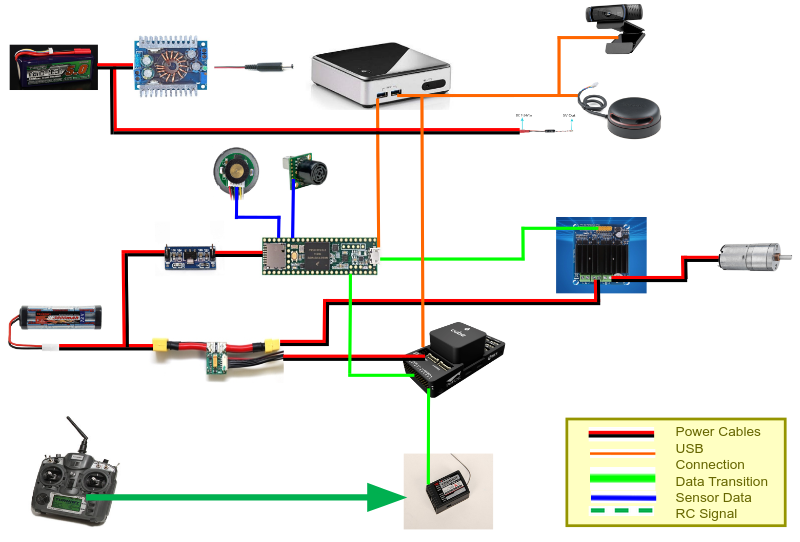
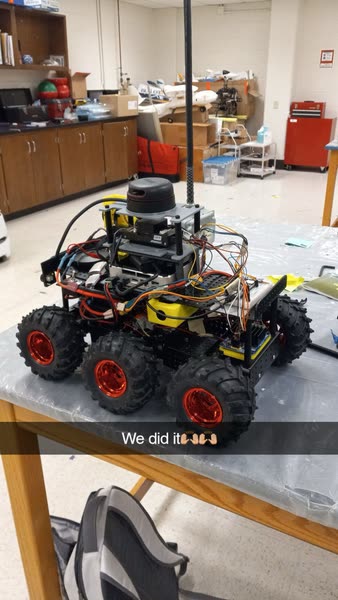
The rover was developed across increasingly complex autonomy tasks that validated GPS navigation, wheel-encoder odometry, range sensing, and waypoint generation under practical compute and integration constraints. The system combined a LiPo-powered electronics stack, mini-PC, microcontroller, GPS, camera, motor drivers, and manual-override path, with sensors enabled or removed depending on each task requirement to keep the platform reliable on constrained hardware.
What I contributed
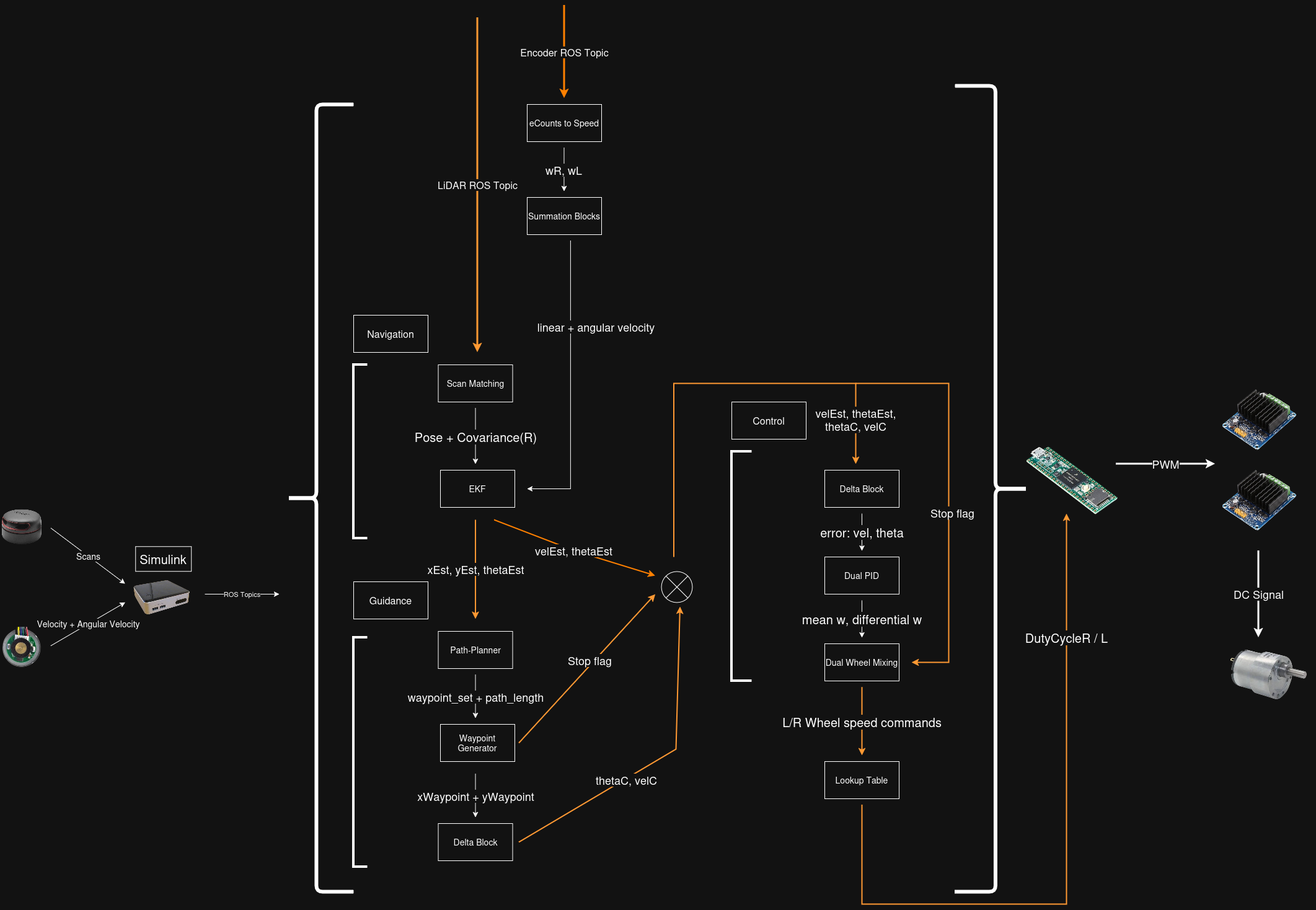
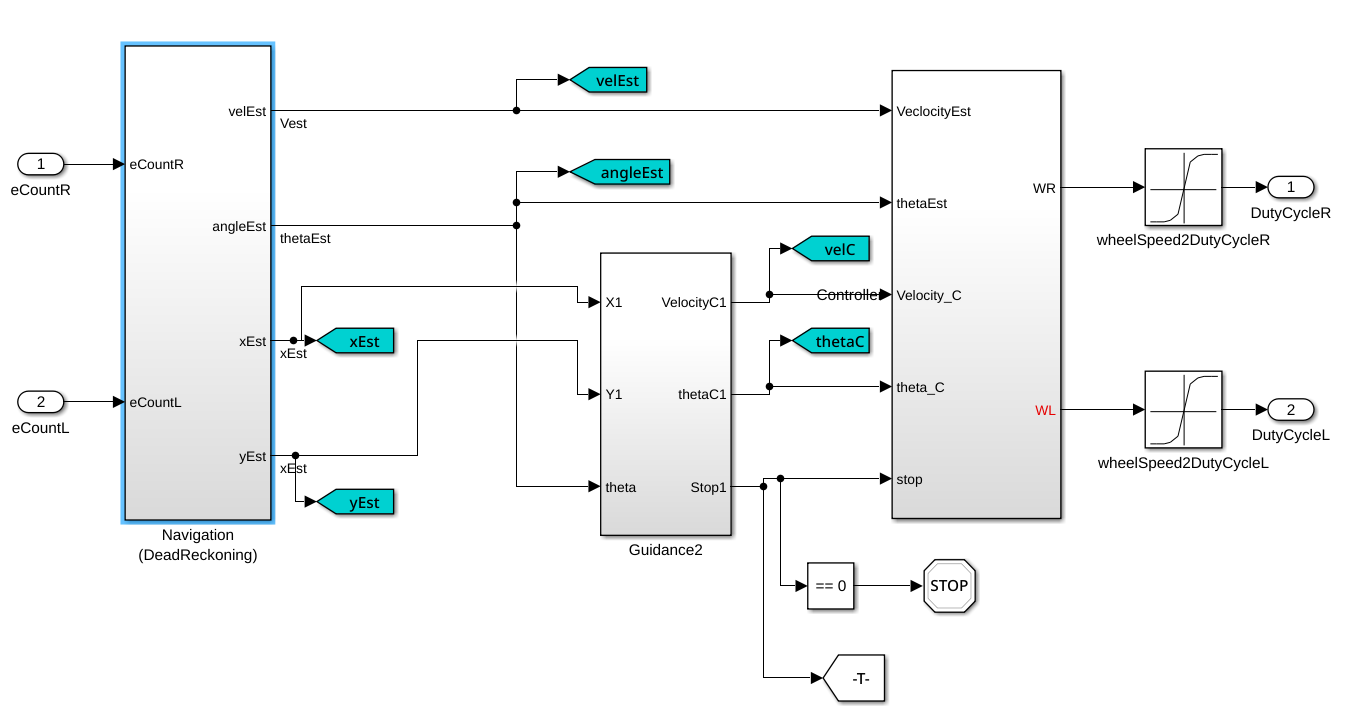
I led systems integration for a five-person team and independently built roughly 80% of the rover’s GNC architecture, connecting waypoint logic, localization feedback, and speed/heading control into a closed-loop Simulink pipeline. I also configured the ROS/MAVROS communication path between the Pixhawk, onboard computer, and embedded motor controller, validated sensor and command flow, and made practical architecture tradeoffs to preserve waypoint-following reliability under onboard compute limits.